

IMEMR
EMRO
Volume 7, Issue 2 (2026)
3 2026, 7(2): 65-72 |
Back to browse issues page
Request Type:




Ethics code: IR.DUMS.1398.037
History
Received: 2026/01/26 | Accepted: 2026/03/21 | Published: 2026/03/29
Received: 2026/01/26 | Accepted: 2026/03/21 | Published: 2026/03/29
How to cite this article
Rezaei R, Mohammadi S, Jahangirimehr A, Pajohideh Z. General Health, Marital Satisfaction, and Happiness among Women with/without Recurrent Pregnancy Loss. 3 2026; 7 (2) :65-72
URL: http://jccs.daneshafarand.org/article-8-87203-en.html
URL: http://jccs.daneshafarand.org/article-8-87203-en.html
Download citation:
BibTeX | RIS | EndNote | Medlars | ProCite | Reference Manager | RefWorks
Send citation to:


Rights and permissions
BibTeX | RIS | EndNote | Medlars | ProCite | Reference Manager | RefWorks
Send citation to:


1- Department of Midwifery, Shoushtar Faculty of Medical Sciences, Shoushtar, Iran
2- Reproductive Health Promotion Research Center, Ahvaz Jundishapur University of Medical Sciences, Ahvaz, Iran
3- Department of Public Health, Shoushtar Faculty of Medical Sciences, Shoushtar, Iran
2- Reproductive Health Promotion Research Center, Ahvaz Jundishapur University of Medical Sciences, Ahvaz, Iran
3- Department of Public Health, Shoushtar Faculty of Medical Sciences, Shoushtar, Iran
Keywords:
| Abstract (HTML) (561 Views)
Full-Text: (7 Views)
Introduction
Recurrent pregnancy loss (RPL), clinically defined as two or more consecutive pregnancy losses before 20–24 weeks of gestation, affects approximately 1-3% of reproductive-aged women [1, 2]. Although the biomedical etiologies of RPL are increasingly understood, its psychological and psychosocial sequelae remain underappreciated in routine clinical care. Women experiencing RPL frequently report profound emotional distress, including anxiety, depression, and somatic symptoms [3, 4]. Pooled evidence indicates that the prevalence of moderate-to-severe depression is nearly four times higher among women with RPL than among fertile controls [5]. In addition, cohort studies have reported that up to 42% of women with recurrent miscarriage experience moderate-to-severe psychological stress, compared with approximately 23% of women without a history of pregnancy loss [6].
Beyond acute psychiatric symptoms, RPL may erode broader, multidimensional aspects of well-being, including general health perceptions, marital satisfaction, and subjective happiness. Grounded in the biopsychosocial model of reproductive distress, these three constructs operate synergistically: somatic and cognitive stress appraisals can disrupt perceptions of general health, repeated pregnancy loss can strain dyadic coping mechanisms and relational equilibrium, and chronic anticipatory grief can progressively deplete positive affect and life satisfaction. Collectively, these domains serve as critical protective factors that influence coping resilience, treatment adherence, and overall quality of life during fertility journeys [3, 7-9]. However, existing evidence predominantly focuses on clinical depression or acute grief immediately following pregnancy loss, neglecting the chronic, multidimensional psychological burden that RPL imposes on women’s daily functioning, relational dynamics, and positive psychological resources.
Prior investigations have predominantly employed cross-sectional designs, convenience samples, or unidimensional psychological scales, which limit causal inference and generalizability [8, 10]. Furthermore, most research has isolated negative outcomes (e.g., anxiety or depression) without examining how RPL simultaneously affects perceptions of general health, marital harmony, and positive psychological constructs, such as happiness and life satisfaction [3, 8, 10, 11]. Crucially, the vast majority of existing studies lack a rigorously matched healthy control group, making it methodologically difficult to differentiate pregnancy-specific psychological distress from baseline population characteristics or preexisting vulnerabilities [12]. Without comparative data from reproductively healthy women, observed deficits in well-being cannot be confidently attributed to the cumulative trauma of RPL. This lack of a controlled comparison obscures whether compromised psychological functioning is a direct consequence of RPL or merely reflects broader demographic, socioeconomic, and contextual factors. Consequently, the synergistic impact of repeated pregnancy loss on holistic well-being remains inadequately characterized, leaving a critical gap in understanding how RPL affects both the negative and positive dimensions of women’s psychological health.
Addressing this gap is both clinically and scientifically imperative. To distinguish the specific psychological effects of RPL from baseline population norms, a case-control design with matched healthy controls was adopted. Establishing quantifiable differences in general health, marital satisfaction, and happiness between women with RPL and their healthy counterparts will enable healthcare providers to identify specific psychosocial risk thresholds, prioritize integrated counseling, and develop targeted interventions that extend beyond biomedical management. Elucidating how relational and positive psychological factors are affected by RPL will inform patient-centered care models that recognize emotional and marital well-being as foundational components of reproductive health. Specifically, these findings will support the integration of standardized psychosocial screening protocols into routine RPL clinics, facilitate threshold-based referrals for couples counseling, and guide the evidence-based allocation of mental health resources within fertility care pathways.
This case-control study aimed to compare general health, marital satisfaction, and subjective happiness between women with recurrent miscarriage and matched healthy controls, thereby extending the evidence base beyond pathology-oriented outcomes toward a more holistic, patient-centered perspective on reproductive well-being.
Materials and Methods
Design and sample
This matched case-control study was performed between January 2025 and June 2025 in Shushtar, a city located in Khuzestan Province in southwestern Iran. The study protocol was designed and reported in accordance with the Strengthening the Reporting of Observational Studies in Epidemiology (STROBE) guidelines for case-control studies [13].
The sample comprised all reproductive-aged women residing in Shushtar, and participants were recruited from hospitals, obstetrics and gynecology clinics, and primary healthcare centers affiliated with Shushtar University of Medical Sciences. The case group included women diagnosed with RPL, defined as two or more consecutive pregnancy losses before 20 weeks of gestation [14], whereas the control group comprised reproductively healthy women with no history of pregnancy loss who were matched to the cases.
The inclusion criteria were being a reproductive-aged woman (15-49 years), having permanent residence in Shushtar, possessing sufficient proficiency in Persian to understand the study procedures and questionnaire items, and being willing to participate and provide written informed consent, no history of infertility or use of assisted reproductive technologies (ART), no known chromosomal abnormalities in either partner, no history of major psychiatric disorders or current use of psychotropic medications, no history of chronic systemic diseases (e.g., uncontrolled diabetes, hypertension, or autoimmune disorders), and the lack of recent major life stressors (e.g., bereavement or divorce) within the past six months.
The sample size was calculated using the standard formula for comparing means between two independent groups, based on the findings of Hasanpour et al. on sexual intimacy among women with and without recurrent miscarriage [14]:
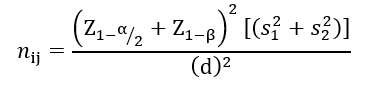
Where, Z1−α/2=1.96 (for a two-sided significance level of α=0.05), Z1−β=0.84 (for a power of 1−β=0.8), S1=6.41 (the standard deviation in the case group from the reference study), S2=3.07 (the standard deviation in the control group from the reference study), and d=2.5 (the minimum clinically meaningful difference between the two group means).
The minimum required sample size was estimated to be 64 participants per group. After accounting for a potential 10% dropout rate, the adjusted sample size was determined to be 70 participants in the case group. To enhance the statistical power and precision of the estimates, a 1:2 case-to-control ratio was adopted, resulting in 140 participants in the control group. The final sample size was 210 participants (71 in the case group and 140 in the control group); the final enrollment slightly exceeded the calculated minimum to ensure adequate statistical power.
For the case group, a nonprobability purposive sampling method was employed. Eligible women were consecutively identified from the obstetrics and gynecology departments of hospitals and specialized private clinics in Shushtar, based on medical records confirming a history of two or more consecutive pregnancy losses. To minimize selection bias and ensure comparability between groups, controls were recruited from the same hospitals and clinics where cases were identified, using a systematic random sampling method. Women attending these facilities for routine gynecological checkups, family planning services, or general health screenings were screened for eligibility. This approach was deliberately chosen to ensure that both cases and controls were drawn from the same underlying source population, thereby reducing the risk of selection bias. For each eligible control, the absence of any history of pregnancy loss was verified through a medical record review and personal interview.
Each woman in the recurrent pregnancy loss (RPL) case group was matched with two control participants based on maternal age (within ±2 years), socioeconomic status (categorized as low, medium, or high using a standardized household economic inventory), and gravida (number of previous pregnancies, within ±1). This matching approach improved comparability between groups and reduced potential confounding from important demographic and reproductive factors.
However, complete matching for gravida was not possible because women with RPL naturally tend to have higher gravidity due to repeated pregnancies and losses. To account for this remaining imbalance, all multivariate analyses—including stepwise regression and path analysis—adjusted for gravida, parity, and the number of previous abortions. This enabled the researchers to estimate the independent association between RPL status and psychological outcomes while controlling for differences in reproductive history.
Instrument
General psychological health was assessed using the 28-item General Health Questionnaire (GHQ-28), originally developed by Goldberg and Hillier. This instrument evaluates psychological distress across four subscales, each consisting of four items: somatic symptoms, anxiety/insomnia, social dysfunction, and severe depression. Items are rated on a 4-point Likert scale (0-3), with total scores ranging from 0 to 84. Higher scores indicate poorer general health and greater psychological distress [15]. The Persian version has demonstrated excellent internal consistency (Cronbach’s α=0.93) and robust construct validity in Iranian populations [16].
Marital satisfaction was assessed using the 47-item ENRICH Marital Satisfaction Inventory, originally developed by Fowers and Olson. This multidimensional tool evaluates five subscales, including marital satisfaction, communication, conflict resolution, financial management, and sexual relationship. Items are rated on a 5-point Likert scale (1=“strongly agree” to 5=“strongly disagree”), with specific items reverse-scored to minimize response bias. Total scores range from 47 to 235, with higher scores indicating greater marital satisfaction [17]. In the Iranian context, the Persian version of the ENRICH inventory has been extensively validated, demonstrating excellent internal consistency (Cronbach’s α>0.9), strong test–retest reliability, and robust construct and criterion-related validity in Iranian populations [18].
The Oxford Happiness Questionnaire (OHQ) is a comprehensive 29-item instrument originally developed by Hills and Argyle to assess multiple dimensions of subjective well-being and positive affect. All 29 items are rated on a 4-point Likert scale ranging from 0 (“never”) to 3 (“always”). The total happiness score is calculated by summing the ratings across all items, yielding a possible score range of 0 to 87. Higher total scores indicate greater levels of subjective happiness. The instrument does not include any reverse-scored items. According to the standard scoring guidelines, total scores are interpreted as follows: scores below 22 indicate low happiness; scores from 22 to 44 indicate moderate happiness; scores from 44 to 68 indicate high happiness; and scores from 68 to 87 indicate very high happiness [19]. In the Iranian context, Alipour and Agah Heris confirmed the instrument’s strong internal consistency (Cronbach’s α>0.9) and acceptable construct validity, establishing it as a highly reliable and culturally appropriate tool for assessing subjective happiness in Iranian samples [20].
The internal consistency of the administered questionnaires was evaluated in this study sample using Cronbach’s alpha coefficient. The results demonstrated satisfactory to excellent reliability for all instrument: the GHQ-28 (α=0.82), the ENRICH Marital Satisfaction Inventory (α=0.87), and the OHQ (α=0.8).
Data collection
Following ethical approval from the Research Ethics Committee of Dezful University of Medical Sciences, trained research assistants administered the questionnaires privately, with completion taking approximately 25-35 minutes. The study adhered to the Declaration of Helsinki and national biomedical research guidelines [21, 22]. Participants received detailed information about the study, provided written informed consent, and were informed that participation was voluntary and could be discontinued at any time without affecting their medical care. Data were anonymized, securely stored, and accessed using unique identification codes. For participants with limited literacy or visual difficulties, the consent form and questionnaires were read aloud, and consent was documented by fingerprint or thumbprint in the presence of an impartial witness. Permission was obtained for the noncommercial academic use of the standardized questionnaires, and no financial compensation was provided.
Data collection was conducted over six months, from January 4 to June 26, 2025. Before the main study, a pilot study was conducted among a subset of participants (n=20) to assess the feasibility of the research protocol, evaluate the clarity of the questionnaires, and estimate the average time required for data collection. Based on the pilot findings, minor adjustments were made to the data collection procedures to enhance participant comprehension and minimize response burden.
Statistical analysis
Data were analyzed using SPSS 23, and figures were generated using GraphPad Prism 9. Normality was assessed using the Kolmogorov–Smirnov test. Categorical parameters were compared using the chi-square test or Fisher’s exact test, as appropriate. Quantitative parameters were compared using the independent-samples t-test for normally distributed data or the Mann-Whitney U test for nonnormally distributed data, with effect sizes reported as Cohen’s d (95% CI). Correlations were examined using Pearson’s or Spearman’s correlation coefficients, depending on the normality of the parameters.
Stepwise multiple regression was used to identify the strongest independent predictors of each psychological outcome, with adjustment for gravida, parity, and previous abortions to account for residual confounding. Path analysis using maximum likelihood estimation and bootstrapping with 5,000 resamples assessed the direct and indirect relationships among study parameters.
Findings
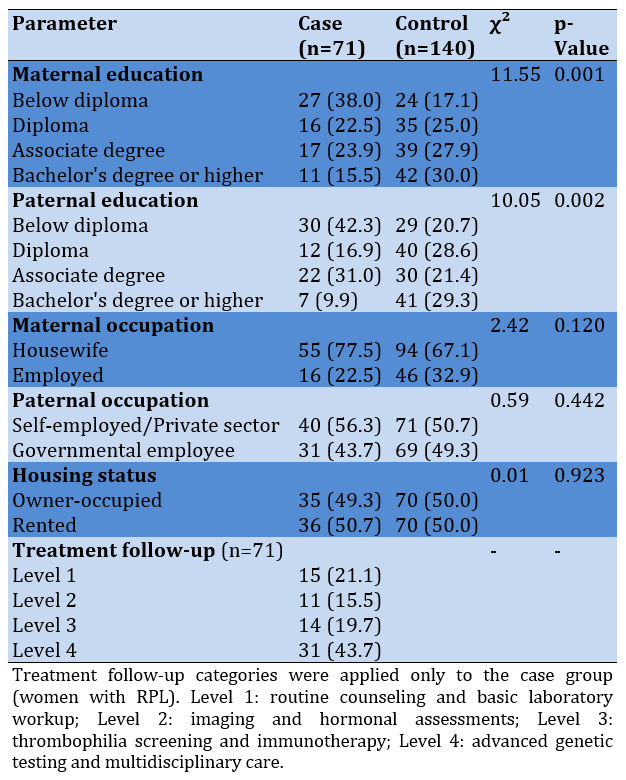
A total of 210 participants were assessed. The case and control groups were comparable in maternal age (32.86±6.59 vs. 32.22±6.97 years; p=0.414) and paternal age (37.85±6.36 vs. 37.51±5.89 years; p=0.653). No significant differences were observed in maternal occupation (p=0.120), paternal occupation (p=0.442), or housing status (p=0.923; Table 1).
Women in the case group had higher mean gravidity (5.48±1.74 vs. 2.89±1.38; p<0.001), lower mean parity (1.42±1.06 vs. 2.00±1.27; p=0.004), and a greater number of previous abortions (4.06±1.46 vs. 0.88 ± 0.95; p<0.001). The distribution of gravidity differed significantly between the groups (χ²=138.00; p<0.001). None of the women in the RPL group had experienced only one or two pregnancies; instead, gravidity was concentrated at higher levels, particularly four pregnancies (19.7%), six pregnancies (16.9%), and eight pregnancies (19.7%). In contrast, the control group was mainly characterized by lower gravidity, with 21.4% having experienced one pregnancy and 21.4% having experienced four pregnancies.
In the case group, the most common parity was two deliveries (35.2%), followed by one (21.1%) and three (16.9%) deliveries, while more than one-quarter of the women (26.8%) were nulliparous. Conversely, the control group exhibited a broader parity distribution, including women with four (11.4%) and five (2.1%) deliveries. The most striking difference was observed in the history of previous abortions (χ²=361.93; p<0.001). By definition, no woman in the case group had experienced zero or one previous abortion. Their histories ranged from two to six abortions, with the highest frequencies observed for four (23.9%) and six (23.9%) previous abortions. In the control group, the vast majority had experienced either zero (40.7%) or one (38.6%) previous abortion, while very few had experienced two (15.0%) or more.
Table 1. Comparison of the frequency of demographic and clinical characteristics between the case and control groups
There were significant differences between the case and control groups across all assessed psychological variables. The case group had significantly higher GHQ scores, indicating poorer general health, than the control group (40.89±17.07 vs. 23.41±15.44; p<0.001; Cohen’s d=1.09; 95% CI: 0.79-1.40). Conversely, the case group reported significantly lower happiness scores (29.65±19.11 vs. 43.86±16.04; p<0.001; Cohen’s d=-0.83; 95% CI: -1.13 to -0.53) and lower marital-satisfaction scores on the ENRICH scale (123.58±59.91 vs. 163.01±54.56; p=0.001; Cohen’s d=-0.70; 95% CI: -0.99 to -0.41). Thus, women in the case group exhibited poorer general health, lower happiness, and lower marital satisfaction than women in the control group.
Spearman’s rank correlation analysis indicated significant interrelationships among the study parameters in both groups (Table 2).
There were significant associations among happiness, general health, and marital satisfaction in both groups. In the case group, happiness was negatively correlated with general health (r=-0.513; p<0.001), indicating that greater happiness was associated with better general health, as reflected by lower GHQ scores. Happiness was also positively correlated with marital satisfaction (r=0.462; p<0.001). Marital satisfaction showed a weaker but statistically significant negative correlation with general health (r=-0.232; p=0.042). In the control group, marital satisfaction demonstrated the strongest correlation with general health (r=-0.573; p<0.001), suggesting that higher marital satisfaction was associated with better general health. Happiness was positively correlated with marital satisfaction (r=0.243; p=0.004) and negatively correlated with general health (r=-0.272; p=0.001).
The regression models significantly predicted general health, happiness, and marital satisfaction, explaining 42.3%, 34.1%, and 36.4% of the variance, respectively. Marital satisfaction was the strongest predictor of general health and happiness, while general health and happiness significantly predicted marital satisfaction (Table 2).
Group status significantly predicted general health, happiness, and ENRICH scores. General health negatively predicted happiness and ENRICH scores, while happiness positively predicted ENRICH scores. The model explained 21.2% of the variance in general health, 23.6% in happiness, and 36.4% in ENRICH scores (Table 3).
Group status affected marital satisfaction only indirectly through general health and happiness (β=0.297), indicating full mediation. General health had the strongest overall effect (β=-0.519), while happiness had a positive direct effect (β=0.288; Table 4).
Table 2. Final stepwise regression results
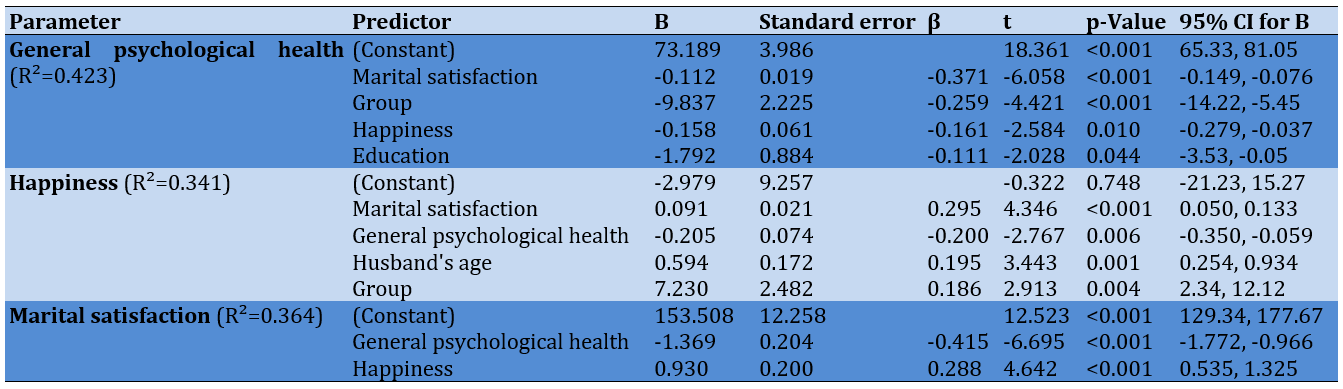
Table 3. Path coefficients and coefficients of determination for the final model

Table 4. Direct, Indirect, and Total Effects in the Final Path Model

The goodness-of-fit indices indicated an excellent fit for the final path analysis model. The chi-square-to-degrees-of-freedom ratio was 0.146, below the acceptable threshold of 3. The GFI (0.99), AGFI (0.979), CFI (0.99), NFI (0.989), and TLI (0.926) all exceeded the recommended value of 0.9. The RMSEA was 0.011, with a PCLOSE value of 0.768, meeting the recommended criteria of <0.08 and >0.05, respectively. The RMR was 0.062, also below the acceptable threshold of 0.08.
Discussion
The primary objective of this matched case-control study was to compare general psychological health, subjective happiness, and marital satisfaction between women with RPL and healthy controls and to elucidate the mediating pathways linking RPL to relational outcomes. Women with a history of RPL experienced significantly poorer general health, lower levels of happiness, and reduced marital satisfaction than their healthy counterparts. RPL status did not exert a direct detrimental effect on marital satisfaction; rather, this relationship was fully mediated by compromised general psychological health and diminished subjective happiness.
RPL exhibited significantly poorer general health and lower levels of happiness, which is consistent with a growing body of international literature. The most recent comprehensive reviews and the ESHRE guidelines emphasize that the psychological burden of RPL extends far beyond acute grief, often manifesting as chronic anxiety, depressive symptoms, and profound disruptions in daily functioning [1, 12]. While many previous studies have predominantly focused on the presence of psychopathology (e.g., depression or PTSD) [5, 6], our findings align with emerging perspectives in positive psychology by highlighting that RPL actively depletes positive affect and subjective well-being. Tavoli et al. [7] and Azin et al. [11] have similarly documented a high prevalence of multidimensional psychological morbidity and diminished quality of life among women with RPL in Iran. Our findings reinforce this biopsychosocial perspective, suggesting that RPL acts as a chronic, cumulative stressor that systematically erodes an individual’s psychological resources and capacity for happiness over time.
Regarding marital dynamics, women with RPL reported significantly lower marital satisfaction. This finding is consistent with prior research indicating that RPL acts as a profound shared stressor that can strain dyadic coping mechanisms and relational equilibrium [10, 23]. Hasanpour et al. have demonstrated that the psychological effects of RPL significantly impair sexual function and marital intimacy, further corroborating the widespread relational impact of recurrent loss [14]. However, the most novel contribution of this study lies in elucidating the mechanism underlying this relational strain. While some earlier literature might implicitly suggest that the trauma of pregnancy loss directly damages the marital bond (e.g., through divergent grieving styles or mutual blame), our path analysis refined this understanding by demonstrating full mediation. Specifically, the statistical association between RPL status and marital dissatisfaction was entirely attenuated when general health and happiness were taken into account. Thus, the loss itself does not directly erode marital harmony; rather, it is the secondary consequence of the woman’s diminished mental health and reduced capacity for positive affect that impairs her emotional availability and dyadic functioning. This interpretation is strongly supported by recent dyadic research, such as the study by Kuhlmann et al. [4], demonstrating that a woman’s posttraumatic distress is positively correlated with her partner’s stress, indicating that unaddressed individual psychological deterioration permeates the couple’s system and thereby compromises overall marital equilibrium.
Consequently, this finding aligns with the biopsychosocial model of reproductive distress, which posits that individual psychological well-being serves as a foundational prerequisite for resilient relational dynamics [24].
It is worth noting a notable divergence in the correlational patterns between the two groups. In the control group, the strongest correlation was observed between marital satisfaction and general health, whereas in the RPL group, the strongest association was between happiness and general health. This divergence can be interpreted through the lens of the stress-buffering hypothesis. In the absence of reproductive trauma, marital harmony naturally serves as a primary driver of a woman’s perceived health. Conversely, in the context of RPL, the trauma disrupts this baseline relational equilibrium. Therefore, the preservation of personal happiness and positive affect becomes the critical independent psychological buffer protecting general health from severe deterioration. This observation highlights a shift in protective factors: for women with RPL, fostering individual resilience and subjective happiness may be a more immediate prerequisite for health than relying solely on relational harmony, which may itself be strained by shared grief.
Despite these robust findings, the results must be interpreted within the context of the study’s limitations. The cross-sectional design precludes definitive causal inferences; although path analysis suggests directional relationships, longitudinal studies are required to track the temporal evolution of these psychological and relational dynamics following successive losses. Additionally, reliance on self-reported measures introduces the potential for recall and social desirability biases. Furthermore, the inclusion of only female participants means that the perspectives of male partners were not captured, which is a notable gap given the shared nature of RPL. Future research should employ longitudinal, dyadic designs to further elucidate how couples mutually navigate the psychological aftermath of RPL and to validate the mediating pathways identified in this study.
RPL’s detrimental impact on marital satisfaction was fully mediated by compromised general health and diminished happiness, which offers a paradigm shift in patient care. It indicates that marital strain is a secondary ripple effect of unaddressed psychological distress, rather than a direct consequence of the loss itself. Therefore, routine RPL management must evolve beyond a strictly biomedical focus. Clinics should integrate standardized psychosocial screening (e.g., GHQ-28) into care pathways. Interventions should prioritize restoring women’s mental well-being and fostering positive affect, supported by dyadic, couple-centered counseling. Treating psychological and relational dimensions as foundational components of reproductive health allows clinicians to support women and their families holistically throughout their reproductive journeys.
This study has several notable strengths. First, the rigorous matched case-control design, with a 1:2 ratio, effectively minimized confounding by key demographic factors. Second, the facility-based recruitment of both cases and controls from the same hospitals and clinics ensured comparability of the sampling frame and reduced selection bias. Third, the application of advanced path analysis allowed us to elucidate complex mediating mechanisms beyond simple correlational analyses. Fourth, the confirmed internal consistency of all instruments (Cronbach’s α>0.80) reinforced the reliability of our findings.
Despite these strengths, several limitations warrant consideration. First, the cross-sectional design precludes definitive causal inferences; longitudinal studies are required to confirm the directional relationships suggested by path analysis. Second, reliance on self-reported questionnaires introduces potential recall and social desirability biases. Third, facility-based recruitment may limit the generalizability of the findings to women who do not regularly attend health care facilities. Fourth, despite efforts to match participants by gravida, the inherent association between RPL and higher gravidity prevented perfect matching. Although we adjusted for reproductive history parameters in multivariate analyses, residual confounding may persist. Fifth, the exclusion of male partners limits the dyadic perspective on RPL’s impact. Finally, the specific cultural context of Shushtar, Iran, and unmeasured parameters, such as coping styles and social support networks, may affect the generalizability of the findings.
Conclusion
Women with recurrent pregnancy loss have poorer health, happiness, and marital satisfaction.
Acknowledgments: The authors sincerely thank all participating women, the staff of hospitals and healthcare centers affiliated with Shushtar University of Medical Sciences, the Research Ethics Committee of Dezful University of Medical Sciences, and the research assistants for their valuable contributions to this study.
Ethical Permissions: This research was conducted in full compliance with the ethical principles of the Declaration of Helsinki regarding medical research involving human participants. Ethical approval was received from the Research Ethics Committee of Dezful University of Medical Sciences (Ethics Code: IR.DUMS.REC.1398.037). All participants provided written informed consent before participating in the study. The nature of the study, including its objectives, procedures, potential risks and benefits, and the right to withdraw at any time without consequence, was fully explained to each participant.
Conflicts of Interests: The authors declared that there are no conflicts of interest regarding the publication of this manuscript.
Authors' Contribution: Rezaei R (First Author), Introduction Writer/Methodologist/Main Researcher/Discussion Writer (25%); Mohammadi S (Second Author), Introduction Writer/Methodologist/Assistant Researcher/Discussion Writer (25%); Jahangirimehr A (Third Author), Assistant Researcher/Statistical Analyst (25%); Pajohideh ZS (Fourth Author), Assistant Researcher (25%)
Funding/Support: The authors declared that no funds, grants, or other support were received during the preparation of this manuscript.
Recurrent pregnancy loss (RPL), clinically defined as two or more consecutive pregnancy losses before 20–24 weeks of gestation, affects approximately 1-3% of reproductive-aged women [1, 2]. Although the biomedical etiologies of RPL are increasingly understood, its psychological and psychosocial sequelae remain underappreciated in routine clinical care. Women experiencing RPL frequently report profound emotional distress, including anxiety, depression, and somatic symptoms [3, 4]. Pooled evidence indicates that the prevalence of moderate-to-severe depression is nearly four times higher among women with RPL than among fertile controls [5]. In addition, cohort studies have reported that up to 42% of women with recurrent miscarriage experience moderate-to-severe psychological stress, compared with approximately 23% of women without a history of pregnancy loss [6].
Beyond acute psychiatric symptoms, RPL may erode broader, multidimensional aspects of well-being, including general health perceptions, marital satisfaction, and subjective happiness. Grounded in the biopsychosocial model of reproductive distress, these three constructs operate synergistically: somatic and cognitive stress appraisals can disrupt perceptions of general health, repeated pregnancy loss can strain dyadic coping mechanisms and relational equilibrium, and chronic anticipatory grief can progressively deplete positive affect and life satisfaction. Collectively, these domains serve as critical protective factors that influence coping resilience, treatment adherence, and overall quality of life during fertility journeys [3, 7-9]. However, existing evidence predominantly focuses on clinical depression or acute grief immediately following pregnancy loss, neglecting the chronic, multidimensional psychological burden that RPL imposes on women’s daily functioning, relational dynamics, and positive psychological resources.
Prior investigations have predominantly employed cross-sectional designs, convenience samples, or unidimensional psychological scales, which limit causal inference and generalizability [8, 10]. Furthermore, most research has isolated negative outcomes (e.g., anxiety or depression) without examining how RPL simultaneously affects perceptions of general health, marital harmony, and positive psychological constructs, such as happiness and life satisfaction [3, 8, 10, 11]. Crucially, the vast majority of existing studies lack a rigorously matched healthy control group, making it methodologically difficult to differentiate pregnancy-specific psychological distress from baseline population characteristics or preexisting vulnerabilities [12]. Without comparative data from reproductively healthy women, observed deficits in well-being cannot be confidently attributed to the cumulative trauma of RPL. This lack of a controlled comparison obscures whether compromised psychological functioning is a direct consequence of RPL or merely reflects broader demographic, socioeconomic, and contextual factors. Consequently, the synergistic impact of repeated pregnancy loss on holistic well-being remains inadequately characterized, leaving a critical gap in understanding how RPL affects both the negative and positive dimensions of women’s psychological health.
Addressing this gap is both clinically and scientifically imperative. To distinguish the specific psychological effects of RPL from baseline population norms, a case-control design with matched healthy controls was adopted. Establishing quantifiable differences in general health, marital satisfaction, and happiness between women with RPL and their healthy counterparts will enable healthcare providers to identify specific psychosocial risk thresholds, prioritize integrated counseling, and develop targeted interventions that extend beyond biomedical management. Elucidating how relational and positive psychological factors are affected by RPL will inform patient-centered care models that recognize emotional and marital well-being as foundational components of reproductive health. Specifically, these findings will support the integration of standardized psychosocial screening protocols into routine RPL clinics, facilitate threshold-based referrals for couples counseling, and guide the evidence-based allocation of mental health resources within fertility care pathways.
This case-control study aimed to compare general health, marital satisfaction, and subjective happiness between women with recurrent miscarriage and matched healthy controls, thereby extending the evidence base beyond pathology-oriented outcomes toward a more holistic, patient-centered perspective on reproductive well-being.
Materials and Methods
Design and sample
This matched case-control study was performed between January 2025 and June 2025 in Shushtar, a city located in Khuzestan Province in southwestern Iran. The study protocol was designed and reported in accordance with the Strengthening the Reporting of Observational Studies in Epidemiology (STROBE) guidelines for case-control studies [13].
The sample comprised all reproductive-aged women residing in Shushtar, and participants were recruited from hospitals, obstetrics and gynecology clinics, and primary healthcare centers affiliated with Shushtar University of Medical Sciences. The case group included women diagnosed with RPL, defined as two or more consecutive pregnancy losses before 20 weeks of gestation [14], whereas the control group comprised reproductively healthy women with no history of pregnancy loss who were matched to the cases.
The inclusion criteria were being a reproductive-aged woman (15-49 years), having permanent residence in Shushtar, possessing sufficient proficiency in Persian to understand the study procedures and questionnaire items, and being willing to participate and provide written informed consent, no history of infertility or use of assisted reproductive technologies (ART), no known chromosomal abnormalities in either partner, no history of major psychiatric disorders or current use of psychotropic medications, no history of chronic systemic diseases (e.g., uncontrolled diabetes, hypertension, or autoimmune disorders), and the lack of recent major life stressors (e.g., bereavement or divorce) within the past six months.
The sample size was calculated using the standard formula for comparing means between two independent groups, based on the findings of Hasanpour et al. on sexual intimacy among women with and without recurrent miscarriage [14]:
Where, Z1−α/2=1.96 (for a two-sided significance level of α=0.05), Z1−β=0.84 (for a power of 1−β=0.8), S1=6.41 (the standard deviation in the case group from the reference study), S2=3.07 (the standard deviation in the control group from the reference study), and d=2.5 (the minimum clinically meaningful difference between the two group means).
The minimum required sample size was estimated to be 64 participants per group. After accounting for a potential 10% dropout rate, the adjusted sample size was determined to be 70 participants in the case group. To enhance the statistical power and precision of the estimates, a 1:2 case-to-control ratio was adopted, resulting in 140 participants in the control group. The final sample size was 210 participants (71 in the case group and 140 in the control group); the final enrollment slightly exceeded the calculated minimum to ensure adequate statistical power.
For the case group, a nonprobability purposive sampling method was employed. Eligible women were consecutively identified from the obstetrics and gynecology departments of hospitals and specialized private clinics in Shushtar, based on medical records confirming a history of two or more consecutive pregnancy losses. To minimize selection bias and ensure comparability between groups, controls were recruited from the same hospitals and clinics where cases were identified, using a systematic random sampling method. Women attending these facilities for routine gynecological checkups, family planning services, or general health screenings were screened for eligibility. This approach was deliberately chosen to ensure that both cases and controls were drawn from the same underlying source population, thereby reducing the risk of selection bias. For each eligible control, the absence of any history of pregnancy loss was verified through a medical record review and personal interview.
Each woman in the recurrent pregnancy loss (RPL) case group was matched with two control participants based on maternal age (within ±2 years), socioeconomic status (categorized as low, medium, or high using a standardized household economic inventory), and gravida (number of previous pregnancies, within ±1). This matching approach improved comparability between groups and reduced potential confounding from important demographic and reproductive factors.
However, complete matching for gravida was not possible because women with RPL naturally tend to have higher gravidity due to repeated pregnancies and losses. To account for this remaining imbalance, all multivariate analyses—including stepwise regression and path analysis—adjusted for gravida, parity, and the number of previous abortions. This enabled the researchers to estimate the independent association between RPL status and psychological outcomes while controlling for differences in reproductive history.
Instrument
General psychological health was assessed using the 28-item General Health Questionnaire (GHQ-28), originally developed by Goldberg and Hillier. This instrument evaluates psychological distress across four subscales, each consisting of four items: somatic symptoms, anxiety/insomnia, social dysfunction, and severe depression. Items are rated on a 4-point Likert scale (0-3), with total scores ranging from 0 to 84. Higher scores indicate poorer general health and greater psychological distress [15]. The Persian version has demonstrated excellent internal consistency (Cronbach’s α=0.93) and robust construct validity in Iranian populations [16].
Marital satisfaction was assessed using the 47-item ENRICH Marital Satisfaction Inventory, originally developed by Fowers and Olson. This multidimensional tool evaluates five subscales, including marital satisfaction, communication, conflict resolution, financial management, and sexual relationship. Items are rated on a 5-point Likert scale (1=“strongly agree” to 5=“strongly disagree”), with specific items reverse-scored to minimize response bias. Total scores range from 47 to 235, with higher scores indicating greater marital satisfaction [17]. In the Iranian context, the Persian version of the ENRICH inventory has been extensively validated, demonstrating excellent internal consistency (Cronbach’s α>0.9), strong test–retest reliability, and robust construct and criterion-related validity in Iranian populations [18].
The Oxford Happiness Questionnaire (OHQ) is a comprehensive 29-item instrument originally developed by Hills and Argyle to assess multiple dimensions of subjective well-being and positive affect. All 29 items are rated on a 4-point Likert scale ranging from 0 (“never”) to 3 (“always”). The total happiness score is calculated by summing the ratings across all items, yielding a possible score range of 0 to 87. Higher total scores indicate greater levels of subjective happiness. The instrument does not include any reverse-scored items. According to the standard scoring guidelines, total scores are interpreted as follows: scores below 22 indicate low happiness; scores from 22 to 44 indicate moderate happiness; scores from 44 to 68 indicate high happiness; and scores from 68 to 87 indicate very high happiness [19]. In the Iranian context, Alipour and Agah Heris confirmed the instrument’s strong internal consistency (Cronbach’s α>0.9) and acceptable construct validity, establishing it as a highly reliable and culturally appropriate tool for assessing subjective happiness in Iranian samples [20].
The internal consistency of the administered questionnaires was evaluated in this study sample using Cronbach’s alpha coefficient. The results demonstrated satisfactory to excellent reliability for all instrument: the GHQ-28 (α=0.82), the ENRICH Marital Satisfaction Inventory (α=0.87), and the OHQ (α=0.8).
Data collection
Following ethical approval from the Research Ethics Committee of Dezful University of Medical Sciences, trained research assistants administered the questionnaires privately, with completion taking approximately 25-35 minutes. The study adhered to the Declaration of Helsinki and national biomedical research guidelines [21, 22]. Participants received detailed information about the study, provided written informed consent, and were informed that participation was voluntary and could be discontinued at any time without affecting their medical care. Data were anonymized, securely stored, and accessed using unique identification codes. For participants with limited literacy or visual difficulties, the consent form and questionnaires were read aloud, and consent was documented by fingerprint or thumbprint in the presence of an impartial witness. Permission was obtained for the noncommercial academic use of the standardized questionnaires, and no financial compensation was provided.
Data collection was conducted over six months, from January 4 to June 26, 2025. Before the main study, a pilot study was conducted among a subset of participants (n=20) to assess the feasibility of the research protocol, evaluate the clarity of the questionnaires, and estimate the average time required for data collection. Based on the pilot findings, minor adjustments were made to the data collection procedures to enhance participant comprehension and minimize response burden.
Statistical analysis
Data were analyzed using SPSS 23, and figures were generated using GraphPad Prism 9. Normality was assessed using the Kolmogorov–Smirnov test. Categorical parameters were compared using the chi-square test or Fisher’s exact test, as appropriate. Quantitative parameters were compared using the independent-samples t-test for normally distributed data or the Mann-Whitney U test for nonnormally distributed data, with effect sizes reported as Cohen’s d (95% CI). Correlations were examined using Pearson’s or Spearman’s correlation coefficients, depending on the normality of the parameters.
Stepwise multiple regression was used to identify the strongest independent predictors of each psychological outcome, with adjustment for gravida, parity, and previous abortions to account for residual confounding. Path analysis using maximum likelihood estimation and bootstrapping with 5,000 resamples assessed the direct and indirect relationships among study parameters.
Findings
A total of 210 participants were assessed. The case and control groups were comparable in maternal age (32.86±6.59 vs. 32.22±6.97 years; p=0.414) and paternal age (37.85±6.36 vs. 37.51±5.89 years; p=0.653). No significant differences were observed in maternal occupation (p=0.120), paternal occupation (p=0.442), or housing status (p=0.923; Table 1).
Women in the case group had higher mean gravidity (5.48±1.74 vs. 2.89±1.38; p<0.001), lower mean parity (1.42±1.06 vs. 2.00±1.27; p=0.004), and a greater number of previous abortions (4.06±1.46 vs. 0.88 ± 0.95; p<0.001). The distribution of gravidity differed significantly between the groups (χ²=138.00; p<0.001). None of the women in the RPL group had experienced only one or two pregnancies; instead, gravidity was concentrated at higher levels, particularly four pregnancies (19.7%), six pregnancies (16.9%), and eight pregnancies (19.7%). In contrast, the control group was mainly characterized by lower gravidity, with 21.4% having experienced one pregnancy and 21.4% having experienced four pregnancies.
In the case group, the most common parity was two deliveries (35.2%), followed by one (21.1%) and three (16.9%) deliveries, while more than one-quarter of the women (26.8%) were nulliparous. Conversely, the control group exhibited a broader parity distribution, including women with four (11.4%) and five (2.1%) deliveries. The most striking difference was observed in the history of previous abortions (χ²=361.93; p<0.001). By definition, no woman in the case group had experienced zero or one previous abortion. Their histories ranged from two to six abortions, with the highest frequencies observed for four (23.9%) and six (23.9%) previous abortions. In the control group, the vast majority had experienced either zero (40.7%) or one (38.6%) previous abortion, while very few had experienced two (15.0%) or more.
Table 1. Comparison of the frequency of demographic and clinical characteristics between the case and control groups
There were significant differences between the case and control groups across all assessed psychological variables. The case group had significantly higher GHQ scores, indicating poorer general health, than the control group (40.89±17.07 vs. 23.41±15.44; p<0.001; Cohen’s d=1.09; 95% CI: 0.79-1.40). Conversely, the case group reported significantly lower happiness scores (29.65±19.11 vs. 43.86±16.04; p<0.001; Cohen’s d=-0.83; 95% CI: -1.13 to -0.53) and lower marital-satisfaction scores on the ENRICH scale (123.58±59.91 vs. 163.01±54.56; p=0.001; Cohen’s d=-0.70; 95% CI: -0.99 to -0.41). Thus, women in the case group exhibited poorer general health, lower happiness, and lower marital satisfaction than women in the control group.
Spearman’s rank correlation analysis indicated significant interrelationships among the study parameters in both groups (Table 2).
There were significant associations among happiness, general health, and marital satisfaction in both groups. In the case group, happiness was negatively correlated with general health (r=-0.513; p<0.001), indicating that greater happiness was associated with better general health, as reflected by lower GHQ scores. Happiness was also positively correlated with marital satisfaction (r=0.462; p<0.001). Marital satisfaction showed a weaker but statistically significant negative correlation with general health (r=-0.232; p=0.042). In the control group, marital satisfaction demonstrated the strongest correlation with general health (r=-0.573; p<0.001), suggesting that higher marital satisfaction was associated with better general health. Happiness was positively correlated with marital satisfaction (r=0.243; p=0.004) and negatively correlated with general health (r=-0.272; p=0.001).
The regression models significantly predicted general health, happiness, and marital satisfaction, explaining 42.3%, 34.1%, and 36.4% of the variance, respectively. Marital satisfaction was the strongest predictor of general health and happiness, while general health and happiness significantly predicted marital satisfaction (Table 2).
Group status significantly predicted general health, happiness, and ENRICH scores. General health negatively predicted happiness and ENRICH scores, while happiness positively predicted ENRICH scores. The model explained 21.2% of the variance in general health, 23.6% in happiness, and 36.4% in ENRICH scores (Table 3).
Group status affected marital satisfaction only indirectly through general health and happiness (β=0.297), indicating full mediation. General health had the strongest overall effect (β=-0.519), while happiness had a positive direct effect (β=0.288; Table 4).
Table 2. Final stepwise regression results
Table 3. Path coefficients and coefficients of determination for the final model
Table 4. Direct, Indirect, and Total Effects in the Final Path Model
The goodness-of-fit indices indicated an excellent fit for the final path analysis model. The chi-square-to-degrees-of-freedom ratio was 0.146, below the acceptable threshold of 3. The GFI (0.99), AGFI (0.979), CFI (0.99), NFI (0.989), and TLI (0.926) all exceeded the recommended value of 0.9. The RMSEA was 0.011, with a PCLOSE value of 0.768, meeting the recommended criteria of <0.08 and >0.05, respectively. The RMR was 0.062, also below the acceptable threshold of 0.08.
Discussion
The primary objective of this matched case-control study was to compare general psychological health, subjective happiness, and marital satisfaction between women with RPL and healthy controls and to elucidate the mediating pathways linking RPL to relational outcomes. Women with a history of RPL experienced significantly poorer general health, lower levels of happiness, and reduced marital satisfaction than their healthy counterparts. RPL status did not exert a direct detrimental effect on marital satisfaction; rather, this relationship was fully mediated by compromised general psychological health and diminished subjective happiness.
RPL exhibited significantly poorer general health and lower levels of happiness, which is consistent with a growing body of international literature. The most recent comprehensive reviews and the ESHRE guidelines emphasize that the psychological burden of RPL extends far beyond acute grief, often manifesting as chronic anxiety, depressive symptoms, and profound disruptions in daily functioning [1, 12]. While many previous studies have predominantly focused on the presence of psychopathology (e.g., depression or PTSD) [5, 6], our findings align with emerging perspectives in positive psychology by highlighting that RPL actively depletes positive affect and subjective well-being. Tavoli et al. [7] and Azin et al. [11] have similarly documented a high prevalence of multidimensional psychological morbidity and diminished quality of life among women with RPL in Iran. Our findings reinforce this biopsychosocial perspective, suggesting that RPL acts as a chronic, cumulative stressor that systematically erodes an individual’s psychological resources and capacity for happiness over time.
Regarding marital dynamics, women with RPL reported significantly lower marital satisfaction. This finding is consistent with prior research indicating that RPL acts as a profound shared stressor that can strain dyadic coping mechanisms and relational equilibrium [10, 23]. Hasanpour et al. have demonstrated that the psychological effects of RPL significantly impair sexual function and marital intimacy, further corroborating the widespread relational impact of recurrent loss [14]. However, the most novel contribution of this study lies in elucidating the mechanism underlying this relational strain. While some earlier literature might implicitly suggest that the trauma of pregnancy loss directly damages the marital bond (e.g., through divergent grieving styles or mutual blame), our path analysis refined this understanding by demonstrating full mediation. Specifically, the statistical association between RPL status and marital dissatisfaction was entirely attenuated when general health and happiness were taken into account. Thus, the loss itself does not directly erode marital harmony; rather, it is the secondary consequence of the woman’s diminished mental health and reduced capacity for positive affect that impairs her emotional availability and dyadic functioning. This interpretation is strongly supported by recent dyadic research, such as the study by Kuhlmann et al. [4], demonstrating that a woman’s posttraumatic distress is positively correlated with her partner’s stress, indicating that unaddressed individual psychological deterioration permeates the couple’s system and thereby compromises overall marital equilibrium.
Consequently, this finding aligns with the biopsychosocial model of reproductive distress, which posits that individual psychological well-being serves as a foundational prerequisite for resilient relational dynamics [24].
It is worth noting a notable divergence in the correlational patterns between the two groups. In the control group, the strongest correlation was observed between marital satisfaction and general health, whereas in the RPL group, the strongest association was between happiness and general health. This divergence can be interpreted through the lens of the stress-buffering hypothesis. In the absence of reproductive trauma, marital harmony naturally serves as a primary driver of a woman’s perceived health. Conversely, in the context of RPL, the trauma disrupts this baseline relational equilibrium. Therefore, the preservation of personal happiness and positive affect becomes the critical independent psychological buffer protecting general health from severe deterioration. This observation highlights a shift in protective factors: for women with RPL, fostering individual resilience and subjective happiness may be a more immediate prerequisite for health than relying solely on relational harmony, which may itself be strained by shared grief.
Despite these robust findings, the results must be interpreted within the context of the study’s limitations. The cross-sectional design precludes definitive causal inferences; although path analysis suggests directional relationships, longitudinal studies are required to track the temporal evolution of these psychological and relational dynamics following successive losses. Additionally, reliance on self-reported measures introduces the potential for recall and social desirability biases. Furthermore, the inclusion of only female participants means that the perspectives of male partners were not captured, which is a notable gap given the shared nature of RPL. Future research should employ longitudinal, dyadic designs to further elucidate how couples mutually navigate the psychological aftermath of RPL and to validate the mediating pathways identified in this study.
RPL’s detrimental impact on marital satisfaction was fully mediated by compromised general health and diminished happiness, which offers a paradigm shift in patient care. It indicates that marital strain is a secondary ripple effect of unaddressed psychological distress, rather than a direct consequence of the loss itself. Therefore, routine RPL management must evolve beyond a strictly biomedical focus. Clinics should integrate standardized psychosocial screening (e.g., GHQ-28) into care pathways. Interventions should prioritize restoring women’s mental well-being and fostering positive affect, supported by dyadic, couple-centered counseling. Treating psychological and relational dimensions as foundational components of reproductive health allows clinicians to support women and their families holistically throughout their reproductive journeys.
This study has several notable strengths. First, the rigorous matched case-control design, with a 1:2 ratio, effectively minimized confounding by key demographic factors. Second, the facility-based recruitment of both cases and controls from the same hospitals and clinics ensured comparability of the sampling frame and reduced selection bias. Third, the application of advanced path analysis allowed us to elucidate complex mediating mechanisms beyond simple correlational analyses. Fourth, the confirmed internal consistency of all instruments (Cronbach’s α>0.80) reinforced the reliability of our findings.
Despite these strengths, several limitations warrant consideration. First, the cross-sectional design precludes definitive causal inferences; longitudinal studies are required to confirm the directional relationships suggested by path analysis. Second, reliance on self-reported questionnaires introduces potential recall and social desirability biases. Third, facility-based recruitment may limit the generalizability of the findings to women who do not regularly attend health care facilities. Fourth, despite efforts to match participants by gravida, the inherent association between RPL and higher gravidity prevented perfect matching. Although we adjusted for reproductive history parameters in multivariate analyses, residual confounding may persist. Fifth, the exclusion of male partners limits the dyadic perspective on RPL’s impact. Finally, the specific cultural context of Shushtar, Iran, and unmeasured parameters, such as coping styles and social support networks, may affect the generalizability of the findings.
Conclusion
Women with recurrent pregnancy loss have poorer health, happiness, and marital satisfaction.
Acknowledgments: The authors sincerely thank all participating women, the staff of hospitals and healthcare centers affiliated with Shushtar University of Medical Sciences, the Research Ethics Committee of Dezful University of Medical Sciences, and the research assistants for their valuable contributions to this study.
Ethical Permissions: This research was conducted in full compliance with the ethical principles of the Declaration of Helsinki regarding medical research involving human participants. Ethical approval was received from the Research Ethics Committee of Dezful University of Medical Sciences (Ethics Code: IR.DUMS.REC.1398.037). All participants provided written informed consent before participating in the study. The nature of the study, including its objectives, procedures, potential risks and benefits, and the right to withdraw at any time without consequence, was fully explained to each participant.
Conflicts of Interests: The authors declared that there are no conflicts of interest regarding the publication of this manuscript.
Authors' Contribution: Rezaei R (First Author), Introduction Writer/Methodologist/Main Researcher/Discussion Writer (25%); Mohammadi S (Second Author), Introduction Writer/Methodologist/Assistant Researcher/Discussion Writer (25%); Jahangirimehr A (Third Author), Assistant Researcher/Statistical Analyst (25%); Pajohideh ZS (Fourth Author), Assistant Researcher (25%)
Funding/Support: The authors declared that no funds, grants, or other support were received during the preparation of this manuscript.
References
1. Turesheva A, Aimagambetova G, Ukybassova T, Marat A, Kanabekova P, Kaldygulova L, et al. Recurrent pregnancy loss etiology, risk factors, diagnosis, and management. Fresh look into a full box. J Clin Med. 2023;12(12):4074. [Link] [DOI:10.3390/jcm12124074]
2. Zwierzchowska A, Iwan A, Hyc A, Suchońska B, Malejczyk J, Barcz E. Recurrent miscarriage is associated with increased ghrelin mRNA expression in the endometrium-a case-control study. Reprod Biol. 2018;18(1):12-7. [Link] [DOI:10.1016/j.repbio.2017.11.003]
3. Aventin Á, Robinson M, White J, Galeotti M. Recurrent pregnancy loss, psychological distress and wellbeing support for women: A mixed-methods analysis. BMC Womens Health. 2025;25(1):535. [Link] [DOI:10.1186/s12905-025-04079-2]
4. Kuhlmann E, Scharli P, Schick M, Ditzen B, Langer L, Strowitzki T, et al. The posttraumatic impact of recurrent pregnancy loss in both women and men. GEBURTSHILFE UND FRAUENHEILKUNDE. 2023;83(1):88-96. [Link] [DOI:10.1055/a-1916-9180]
5. Inversetti A, Perna G, Lalli G, Grande G, Di Simone N. Depression, stress and anxiety among women and men affected by recurrent pregnancy loss (RPL): A systematic review and meta-analysis. Life. 2023;13(6):1268. [Link] [DOI:10.3390/life13061268]
6. Kolte A, Olsen LR, Mikkelsen E, Christiansen O, Nielsen HS. Depression and emotional stress is highly prevalent among women with recurrent pregnancy loss. Hum Reprod. 2015;30(4):777-82. [Link] [DOI:10.1093/humrep/dev014]
7. Tavoli Z, Mohammadi M, Tavoli A, Moini A, Effatpanah M, Khedmat L, et al. Quality of life and psychological distress in women with recurrent miscarriage: A comparative study. Health Qual Life Outcomes. 2018;16(1):150. [Link] [DOI:10.1186/s12955-018-0982-z]
8. Nitu R, Neamtu R, Iordache O, Stelea L, Dahma G, Sacarin G, et al. A cross-sectional analysis of intimacy problems, stress levels, and couple satisfaction among women with thrombophilia affected by recurrent pregnancy loss. Int J Environ Res Public Health. 2023;20(2):1208. [Link] [DOI:10.3390/ijerph20021208]
9. Stafford S. The mediating role of happiness on marital satisfaction in couples experiencing mental health challenges [dissertation]. Minneapolis: Walden University; 2025. [Link]
10. Voss P, Schick M, Langer L, Ainsworth A, Ditzen B, Strowitzki T, et al. Recurrent pregnancy loss: A shared stressor---couple-orientated psychological research findings. Fertil Steril. 2020;114(6):1288-96. [Link] [DOI:10.1016/j.fertnstert.2020.08.1421]
11. Azin SA, Golbabaei F, Warmelink JC, Eghtedari S, Haghani S, Ranjbar F. Association of depression with sexual function in women with history of recurrent pregnancy loss: Descriptive-correlational study in Tehran, Iran. Fertil Res Pract. 2020;6(1):21. [Link] [DOI:10.1186/s40738-020-00089-w]
12. The ESHRE Guideline Group on RPL, Bender Atik R, Christiansen OB, Elson J, Kolte AM, Lewis S, et al. ESHRE guideline: Recurrent pregnancy loss. Hum Reprod Open. 2018;2018(2):hoy004. [Link] [DOI:10.1093/hropen/hoy004]
13. Cuschieri S. The STROBE guidelines. Saudi J Anaesth. 2019;13(Suppl 1):S31-4. [Link] [DOI:10.4103/sja.SJA_543_18]
14. Hasanpour V, Keshavarz Z, Azin SA, Ansaripour S, Ghasemi E. Comparison of sexual function and intimacy in women with and without recurrent miscarriage. J Isfahan Med Sch. 2019;37(533):768-74. [Persian] [Link]
15. Goldberg DP, Hillier VF. A scaled version of the General Health Questionnaire. Psychol Med. 1979;9(1):139-45. [Link] [DOI:10.1017/S0033291700021644]
16. Malakouti SK, Fatollahi P, Mirabzadeh A, Zandi T. Reliability, validity and factor structure of the GHQ-28 used among elderly Iranians. Int Psychogeriatr. 2007;19(4):623-34. [Link] [DOI:10.1017/S1041610206004522]
17. Fowers BJ, Olson DH. ENRICH marital inventory: A discriminant validity and cross‐validation assessment. J Marital Fam Ther. 1989;15(1):65-79. [Link] [DOI:10.1111/j.1752-0606.1989.tb00777.x]
18. Soleimanian A. Evaluation of irrational beliefs on marital dissatisfaction [master's thesis]. Tehran: Teacher Training College; 1994. [Persian] [Link]
19. Hills P, Argyle M. The Oxford Happiness Questionnaire: A compact scale for the measurement of psychological well-being. Personal Individ Differ. 2002;33(7):1073-82. [Link] [DOI:10.1016/S0191-8869(01)00213-6]
20. Alipour A, Agah Heris M. Reliability and validity of the Oxford Happiness Inventory among Iranians. J Dev Psychol. 2007;3(12):287-98. [Persian] [Link]
21. Parsa-Parsi R, Blackmer J, Ehni HJ, Janbu T, Kloiber O, Wiesing U. Reconsidering the declaration of Helsinki. Lancet. 2013;382(9900):1246-7. [Link] [DOI:10.1016/S0140-6736(13)62094-2]
22. Mardani A, Nakhoda M, Noruzi A, Gooshki ES. Ethical considerations in the biomedical research: Analysis of national biomedical research ethics guidelines in Iran. J Med Ethics Hist Med. 2019;12:4. [Link] [DOI:10.18502/jmehm.v12i4.767]
23. Brier N. Grief following miscarriage: a comprehensive review of the literature. J Womens Health. 2008;17(3):451-64. [Link] [DOI:10.1089/jwh.2007.0505]
24. Bielawska-Batorowicz E. Bio-psycho-social approach to reproductive mental health and reproductive decisions. Behav Sci. 2023;13(1):75. [Link] [DOI:10.3390/bs13010075]