

IMEMR
EMRO
Volume 7, Issue 2 (2026)
3 2026, 7(2): 57-63 |
Back to browse issues page
Request Type:




Ethics code: IR.SUMS.REC.1399.1018
History
Received: 2026/02/18 | Accepted: 2026/04/21 | Published: 2026/05/2
Received: 2026/02/18 | Accepted: 2026/04/21 | Published: 2026/05/2
How to cite this article
Rambod M, Pasyar N, Nazarinia M, Salmanpour M. Lifestyle of Patients with Ankylosing Spondylitis and Sjogren’s Syndrome. 3 2026; 7 (2) :57-63
URL: http://jccs.daneshafarand.org/article-8-87202-en.html
URL: http://jccs.daneshafarand.org/article-8-87202-en.html
Download citation:
BibTeX | RIS | EndNote | Medlars | ProCite | Reference Manager | RefWorks
Send citation to:


Rights and permissions
BibTeX | RIS | EndNote | Medlars | ProCite | Reference Manager | RefWorks
Send citation to:


1- “Community Based Psychiatric Care Research Center” and “Department of Nursing, Faculty of Nursing and Midwifery”, Shiraz University of Medical Sciences, Shiraz, Iran
2- Shiraz Geriatric Research Center, Shiraz University of Medical Sciences, Shiraz, Iran
3- Department of Statistics, Faculty of Mathematical Sciences, University of Kashan, Kashan, Iran
2- Shiraz Geriatric Research Center, Shiraz University of Medical Sciences, Shiraz, Iran
3- Department of Statistics, Faculty of Mathematical Sciences, University of Kashan, Kashan, Iran
Keywords:
Ankylosing Spondylitis [MeSH], Sjogren’s Syndrome [MeSH], Lifestyles [MeSH], Sleep [MeSH], Smoking [MeSH]
| Abstract (HTML) (551 Views)
Full-Text: (11 Views)
Introduction
Ankylosing spondylitis (AS), a chronic autoimmune and inflammatory disease, affects the joints of the spine and adjacent soft tissues, such as tendons and ligaments. Inflammation leads to spinal fibrosis and calcification. Therefore, the spine loses its flexibility, and spinal fusion can occur [1]. These changes lead to clinical manifestations such as back pain and stiffness in the shoulders, hips, fingers, and toes of these patients [1, 2].
Sjögren’s syndrome (SS) is another chronic autoimmune disease. Patients may experience manifestations such as dry mouth and eyes. They may also develop systemic complications, such as pulmonary and kidney diseases and lymphoma [3]. Moreover, patients with SS may be at risk of heart failure and other adverse cardiovascular complications [4]. A family history of autoimmune disease, stressful life events, and infection have been reported as risk factors for SS [5].
Epidemiological studies on the prevalence of AS have indicated that it varies from 0.03% to 1.8% [6]. Moreover, a systematic review and meta-analysis showed that the prevalence of SS is 6.92 per 100,000 person-years [7]. Other studies on the demographic characteristics of AS and SS report that the male-to-female ratio for AS is 2.17 [8]. However, SS is more common in females, with a reported female-to-male ratio of 4.88:1 [9]. The mean ages of patients with AS and SS are reported as 35.0 [10] and 53.1 years [11], respectively, indicating that AS is more common among younger individuals, whereas SS was more commonly seen in middle-aged individuals.
Complications of AS and SS affect patients’ lifestyles. Lifestyle includes the level of physical activity, body mass index (BMI), stress in daily life, alcohol consumption, smoking, sleep, and other factors. Few studies have been published regarding the lifestyles of patients with AS and SS. Physical activity among patients with SS is lower than that among healthy controls [12]. Negative stressful life events are commonly observed in patients with SS [13]. Approximately one-third of patients with AS [14, 15] and one-fifth of patients with SS [16] are cigarette smokers. Moreover, one-fourth of patients with SS consume alcohol. Compared with healthy controls, patients with AS have more sleep problems, which negatively affects their quality of life [17]. Also, 35-90% of patients with AS have poor sleep quality [18] and more severe sleep disorders [19]. Half of patients with SS experience poor sleep quality. Poor sleep quality is associated with poor quality of life, pain, disease activity, anxiety, depression, and dry eye and ocular surface disease in patients with SS [20].
Few studies have investigated the prevalence of AS and SS and the lifestyles of patients with these conditions. Moreover, each lifestyle parameter has been examined in separate studies, and no study has comprehensively examined the lifestyles of patients with AS and SS—including their levels of physical activity, BMI, stress in daily life, alcohol consumption, smoking, and sleep—in a single study. In addition, limited information is available regarding the demographic characteristics of patients with AS and SS. Furthermore, the lifestyles of these patients have not been fully characterized, and comparisons with healthy controls are needed. Therefore, further studies of patients with AS and SS are needed. To improve evidence-based practice and the generalizability of the findings, this study aimed to determine the demographic characteristics of AS and SS patients and compare the lifestyle factors in AS and SS patients with healthy matched controls.
Materials and Methods
Design and sample
This study consisted of two case-control studies and was conducted from 2022 to 2023. The first study included a case group with AS (n=33) and a healthy, matched control group (n=100). The AS and control groups were matched by age and gender at a ratio of 1:3. The second case-control study included a case group with SS (n=120) and a healthy, matched control group (n=120). The SS and control groups were matched by age and gender at a ratio of 1:1. Because each control group was matched to its corresponding case group, the participants in the two control groups were different.
Convenience sampling was used to select the sample. The case groups in both studies were selected from multiple rheumatology clinics. The control participants were selected from among visitors accompanying patients at the general surgery clinics of the Motahari and Imam Reza centers, which are affiliated with Shiraz University of Medical Sciences.
The inclusion criteria for the case groups were being 18 years or older, having a diagnosis of AS or SS confirmed by a rheumatologist, willingness to participate in the study, the ability to understand and complete the study questionnaire, and provision of informed consent. Participants were excluded if they lacked sufficient awareness or the ability to respond to the questionnaire, or failed to complete the paper-based questionnaire in full. The inclusion criteria for controls were the absence of rheumatic or other autoimmune diseases, being the same age as the corresponding case participants, and having the same gender as the corresponding case participants.
All participants signed written informed consent forms. The consent form provided information about the study’s aims and purpose. Participants were informed that participation was voluntary and that they could withdraw from the study at any time and at any stage. In addition, they were informed that the results would be published in aggregate form.
Data were collected from both the case and control groups during the same period to minimize seasonal effects. A research assistant helped with data collection. A rheumatologist researcher introduced the study in the clinics and obtained informed consent from eligible participants. Questionnaires were distributed in the waiting room, where participants completed them before their appointments. The research assistant was present to clarify questions or, when participants were unable to respond independently, to read the items aloud and accurately record their answers. The control groups followed the same procedure, completing the questionnaires in the waiting areas with assistance from research assistants as needed, thereby ensuring consistency across groups.
Instrument
The questionnaire collected information on gender, age, BMI, educational level, comorbid conditions, and the type of family history of rheumatic diseases. It also assessed lifestyle factors, including physical activity level, place of residence, residence in a home with mold or dampness, cigarette and tobacco use, emotional stress in daily life, nighttime sleep, midday naps, and alcohol consumption. Emotional stress in daily life was assessed using a 10-point rating scale ranging from 0 (no stress) to 10 (maximum stress). Participants were asked to rate their perceived level of emotional stress separately in the home and workplace environments. The face and content validity of the questionnaire were evaluated and approved by ten faculty members of Shiraz University of Medical Sciences: five nursing faculty members, one epidemiologist, two internists, and two rheumatologists. The test-retest reliability of the questionnaire over 10 days was 0.90.
Data analysis
Data were analyzed using SPSS 20. The case and control groups were compared using the chi-square test.
Findings
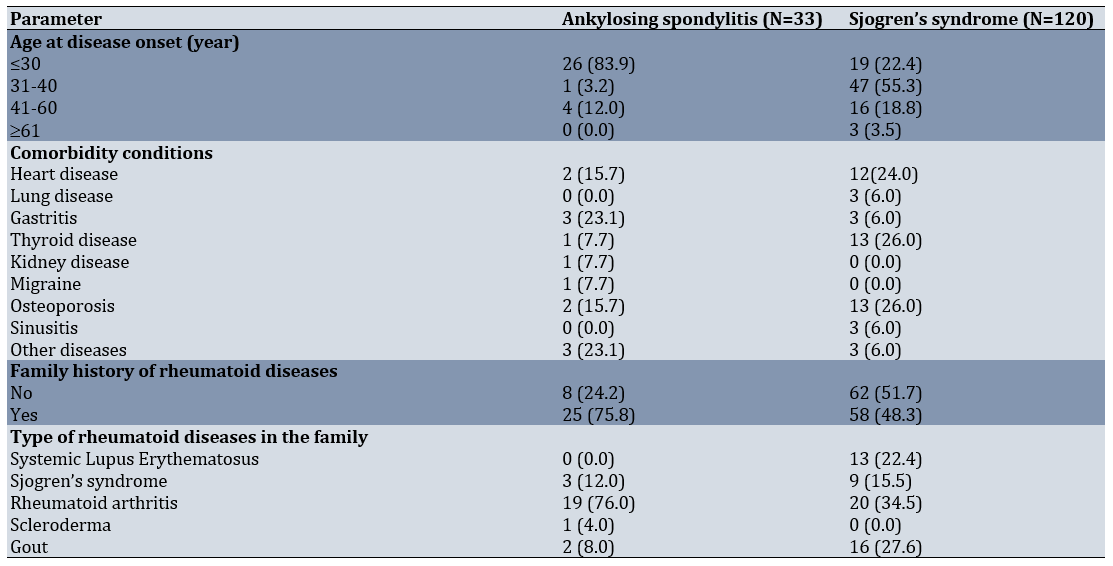
The mean age of the patients with AS was 32.03±8.60 years (range: 16-53 years) and 66.7% were men. Also, 83.9% of the patients developed their first symptoms of AS before the age of 30 and 15.7%, 23.1%, and 15.4% had heart disease, gastritis, and osteoporosis, respectively (Table 1).
Table 1. Frequency of general and clinical characteristics of the patients with Ankylosing spondylitis and Sjogren’s syndrome
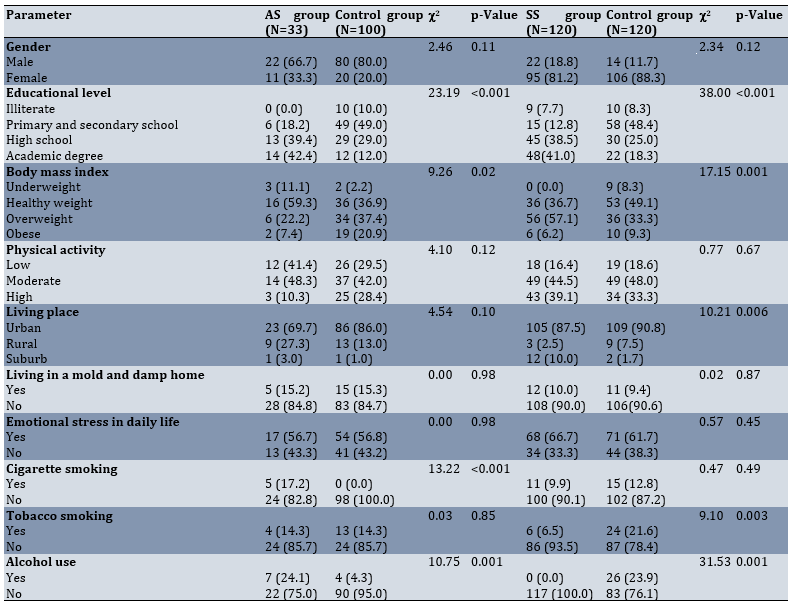
The mean BMI of the patients with AS was 23.06±3.50. A significant difference was observed between AS patients with and the matched controls regarding educational level and BMI. The patients with AS engaged in physical activity for 3.91±2.98 hours per day. The mean stress scores reported by the patients with AS for their home and workplace were 4.60±3.13 and 4.84±3.44, respectively. The control group reported mean stress scores of 5.08±2.93 for the home and 4.38±2.93 for the workplace. The duration of nighttime sleep among the patients with AS and the control group was 6.53±2.27 and 6.82±1.61 hours, respectively. Moreover, the duration of midday naps among the patients with AS and the control group was 91.52±49.66 and 91.31±54.19 minutes, respectively. The duration of sunlight exposure among the patients with AS and the control group was 121.03±118.28 and 94.15±101.92 minutes, respectively. Five patients with AS were cigarette smokers and smoked 8.20±7.29 cigarettes per day. Four participants had used tobacco for 6.33±3.21 years. Seven patients with AS had consumed alcohol for 2.57±0.53 years. Compared with the control group, patients with AS differed significantly in educational level and BMI distribution. Cigarette smoking and alcohol use were also significantly more common among patients with AS (all p<0.05).
The mean age of SS patients was 46.33±10.45 years, ranging from 28 to 65 years. The mean age at disease onset was 38.21±9.88 years. The BMI of the subjects with SS was 25.66±3.51. The duration of nighttime sleep among the patients with SS and the control group was 6.14±1.78 and 6.91±1.66 hours, respectively. The duration of midday naps among the patients with SS and the control group was 71.30±38.96 and 82.50±57.39 minutes, respectively. The duration of sunlight exposure among the patients with SS and the control group was 62.96±87.12 and 94.63±116.53 minutes, respectively. Patients with SS engaged in physical activity for 6.60±2.97 hours per day. The mean stress score at home was 6.21±1.92, in the SS group and 4.17±2.24 in the control group. Moreover, the mean stress score in the workplace was 5.37±3.80 in the SS group and 3.86±2.54 in the control group. Six subjects with SS had used tobacco for 11.50±12.02 years. Compared with the control group, patients with SS had shorter nighttime sleep, midday naps, and sunlight exposure (p<0.05; Table 2).
Table 2. Frequency of demographic and lifestyle characteristics of the Ankylosing spondylitis (AS), Sjogren’s syndrome (SS), and control groups
Discussion
This study aimed to compare lifestyle factors among patients with AS and SS and matched healthy controls. AS was more common in males, with a male-to-female ratio of 2:1, similar to the ratios of 2.17 and 1.57 reported previously [8, 14]. SS was more prevalent in females, with a female-to-male ratio of 4.28:1, consistent with findings that 92.8% and 83% of patients with SS were female [9, 21]. Overall, AS predominated in males, whereas SS was more common in females [22].
The mean age of AS patients was 32.03 years, and 83.9% of the patients reported that their disease onset occurred at ≤30 years of age. In other studies, the mean ages of patients with AS are 43.92 years [14] and 35 years [10]. Consistent with our findings, Koko et al. report that the mean age at AS onset is 29.7 years [23]. Regarding the mean age of SS patients, our it was 46.33 years, and the mean age at SS onset among these patients was 38.21 years. In a study of SS, 54% of patients with SS are younger than 54 years [24].
Another study showed that the ages at symptom onset and SS diagnosis are 40.0 and 43.0 years, respectively, in African patients and 52.0 and 56 years, respectively, in Caucasian patients [25].
Also, 57.6% of patients with AS and 59.0% of patients with SS had a high school education or lower. Similarly, a study showed that 64.1% of patients with SS have a high school education or lower [13]. However, a study of patients with AS reveals that 93.6% of the subjects have ≤12 years of education [23].
Two-thirds of the patients with AS and approximately half of the patients with SS had a family history of rheumatic diseases. In a systematic review and meta-analysis, a family history of autoimmune disease in first-degree relatives is identified as a potential risk factor for SS [5].
Heart disease was found in 15.7% of patients with AS and 24.0% of patients with SS. Wright et al. report a 10-year incidence of cardiovascular disease of 15.8% in patients with AS [15]. Other studies have reported higher rates of heart failure among patients with SS than in the general population [4] and a clear association between SS and cardiovascular disease [26].
Patients with AS had a mean BMI of 23.06 (17.99–30.48), with approximately one-third classified as overweight or obese. Sariyildiz et al. report a higher mean BMI of 27.02 among patients with AS [14]. Among the participants with SS, the mean BMI was 25.66, with 57.1% classified as overweight and 6.2% as obese. Another study reports a BMI of 27.9 among patients with SS, with 32% classified as obese [9].
Patients with SS had significantly shorter nighttime sleep than healthy controls. Previous research similarly reports more sleep problems among patients with AS than among controls [17]. Patients with SS frequently experience sleep disturbances [27], and their overall sleep quality is poorer than that of healthy individuals [28].
Patients with AS reported 3.91 hours of daily physical activity, with approximately half demonstrating a moderate level of activity. Previous research has found a functional impairment score of 3.8 among patients with AS, noting that greater physical activity is associated with an improved quality of life [10, 14]. Among patients with SS, approximately half had moderate activity levels and engaged in 6.60 hours of daily activity, with no significant difference from the controls. However, other studies documente reduced moderate-to-vigorous physical activity and lower overall physical activity among patients with SS than among healthy individuals [12, 29].
Also, 56.7% of patients with AS and 66.7% of patients with SS reported experiencing daily emotional stress. Among patients with SS, the mean stress scores at home and work were 6.21 and 5.37, respectively, and their overall stress levels were higher than those of the controls. A study reports that 86.56% of patients with SS have negative stressful life events, with an average of 2.81 events; family-related stressors occurred more frequently than work-related stressors [13].
In addition, 17.2% of patients with AS were cigarette smokers, smoking an average of 8.20 cigarettes daily, whereas earlier studies report higher smoking rates of 35.2% and 33%—nearly double the rate in our study [14, 15]. Among patients with SS, 9.9% smoked cigarettes and 6.5% used tobacco, consistent with the rates of 6.0%, 13.0%, and 20% reported in previous research [9, 13, 16]. Patients with SS also had lower smoking rates and no alcohol use compared with the controls. Mofors et al. similarly note smoking patterns comparable to those in the general population but higher rates of smoking cessation among patients with SS [24]. Because smoking increases AS activity and hip involvement [30, 31], reduced smoking may reflect disease-related behavioral changes.
Also, 24.1% of patients with AS consumed alcohol for an average of 2.57 years, whereas none of the patients with SS reported alcohol use. Patients with AS also consumed alcohol more frequently than those in the control group. Previous studies similarly report alcohol consumption among 21.3% of patients with AS [14] and 25% of patients with SS [13].
This study provided information about the epidemiological characteristics of AS and SS, which may guide researchers and policymakers in addressing these diseases. It also provided information about the lifestyles of patients with AS and SS, including their physical activity interests and behaviors, place of residence, sleep, daily stress, tobacco and cigarette use, and alcohol consumption. These findings represent an important implication of this study. Therefore, to improve the health of these patients, we recommend lifestyle modifications.
The results highlight the need for comprehensive patient management that extends beyond disease-specific treatment. Lifestyle factors, such as sleep quality, stress reduction, and balanced sunlight exposure, should be addressed as part of routine care, particularly for patients with SS. For patients with AS, smoking and alcohol cessation programs may improve overall health outcomes. Further longitudinal studies are recommended to explore the causal relationships between these lifestyle factors and disease progression. Interventional studies focusing on stress management, sleep hygiene, and lifestyle modification could help determine their potential roles in improving quality of life and disease outcomes in patients with AS and SS.
Conclusion
There are distinct demographic and lifestyle patterns in AS and SS, with AS more common among males and characterized by healthier BMIs but higher smoking and alcohol use, whereas SS is more common among females and associated with shorter sleep, less sunlight exposure, and greater stress.
Acknowledgments: The authors sincerely appreciate the Vice Chancellor for Research Affairs of Shiraz University of Medical Sciences for approving the study (grant No. 21730). The authors also express their sincere gratitude to the National Elites Foundation (Iran) for its generous financial support and the research grant that made this work possible. We also thank the study participants.
Ethical Permissions: This study was approved by the Ethics Committee of Shiraz University of Medical Sciences (IR.SUMS.REC.1399.1018).
Conflicts of Interests: None declared by the authors.
Authors' Contribution: Rambod M (First Author), Introduction Writer/Methodologist/Main Researcher/Discussion Writer/Statistical Analyst (40%); Pasyar N (Second Author), Introduction Writer/Methodologist/Assistant Researcher/Discussion Writer (15%); Nazarinia MA (Third Author), Introduction Writer/Methodologist/Assistant Researcher/Discussion Writer (10%); Salmanpour M (Fourth Author), Introduction Writer/Methodologist/Assistant Researcher/Discussion Writer/Statistical Analyst (35%)
Funding/Support: This study was financially supported by the National Elites Foundation (Iran) and the Vice Chancellor for Research Affairs of Shiraz University of Medical Sciences (grant No.: 21730).
Ankylosing spondylitis (AS), a chronic autoimmune and inflammatory disease, affects the joints of the spine and adjacent soft tissues, such as tendons and ligaments. Inflammation leads to spinal fibrosis and calcification. Therefore, the spine loses its flexibility, and spinal fusion can occur [1]. These changes lead to clinical manifestations such as back pain and stiffness in the shoulders, hips, fingers, and toes of these patients [1, 2].
Sjögren’s syndrome (SS) is another chronic autoimmune disease. Patients may experience manifestations such as dry mouth and eyes. They may also develop systemic complications, such as pulmonary and kidney diseases and lymphoma [3]. Moreover, patients with SS may be at risk of heart failure and other adverse cardiovascular complications [4]. A family history of autoimmune disease, stressful life events, and infection have been reported as risk factors for SS [5].
Epidemiological studies on the prevalence of AS have indicated that it varies from 0.03% to 1.8% [6]. Moreover, a systematic review and meta-analysis showed that the prevalence of SS is 6.92 per 100,000 person-years [7]. Other studies on the demographic characteristics of AS and SS report that the male-to-female ratio for AS is 2.17 [8]. However, SS is more common in females, with a reported female-to-male ratio of 4.88:1 [9]. The mean ages of patients with AS and SS are reported as 35.0 [10] and 53.1 years [11], respectively, indicating that AS is more common among younger individuals, whereas SS was more commonly seen in middle-aged individuals.
Complications of AS and SS affect patients’ lifestyles. Lifestyle includes the level of physical activity, body mass index (BMI), stress in daily life, alcohol consumption, smoking, sleep, and other factors. Few studies have been published regarding the lifestyles of patients with AS and SS. Physical activity among patients with SS is lower than that among healthy controls [12]. Negative stressful life events are commonly observed in patients with SS [13]. Approximately one-third of patients with AS [14, 15] and one-fifth of patients with SS [16] are cigarette smokers. Moreover, one-fourth of patients with SS consume alcohol. Compared with healthy controls, patients with AS have more sleep problems, which negatively affects their quality of life [17]. Also, 35-90% of patients with AS have poor sleep quality [18] and more severe sleep disorders [19]. Half of patients with SS experience poor sleep quality. Poor sleep quality is associated with poor quality of life, pain, disease activity, anxiety, depression, and dry eye and ocular surface disease in patients with SS [20].
Few studies have investigated the prevalence of AS and SS and the lifestyles of patients with these conditions. Moreover, each lifestyle parameter has been examined in separate studies, and no study has comprehensively examined the lifestyles of patients with AS and SS—including their levels of physical activity, BMI, stress in daily life, alcohol consumption, smoking, and sleep—in a single study. In addition, limited information is available regarding the demographic characteristics of patients with AS and SS. Furthermore, the lifestyles of these patients have not been fully characterized, and comparisons with healthy controls are needed. Therefore, further studies of patients with AS and SS are needed. To improve evidence-based practice and the generalizability of the findings, this study aimed to determine the demographic characteristics of AS and SS patients and compare the lifestyle factors in AS and SS patients with healthy matched controls.
Materials and Methods
Design and sample
This study consisted of two case-control studies and was conducted from 2022 to 2023. The first study included a case group with AS (n=33) and a healthy, matched control group (n=100). The AS and control groups were matched by age and gender at a ratio of 1:3. The second case-control study included a case group with SS (n=120) and a healthy, matched control group (n=120). The SS and control groups were matched by age and gender at a ratio of 1:1. Because each control group was matched to its corresponding case group, the participants in the two control groups were different.
Convenience sampling was used to select the sample. The case groups in both studies were selected from multiple rheumatology clinics. The control participants were selected from among visitors accompanying patients at the general surgery clinics of the Motahari and Imam Reza centers, which are affiliated with Shiraz University of Medical Sciences.
The inclusion criteria for the case groups were being 18 years or older, having a diagnosis of AS or SS confirmed by a rheumatologist, willingness to participate in the study, the ability to understand and complete the study questionnaire, and provision of informed consent. Participants were excluded if they lacked sufficient awareness or the ability to respond to the questionnaire, or failed to complete the paper-based questionnaire in full. The inclusion criteria for controls were the absence of rheumatic or other autoimmune diseases, being the same age as the corresponding case participants, and having the same gender as the corresponding case participants.
All participants signed written informed consent forms. The consent form provided information about the study’s aims and purpose. Participants were informed that participation was voluntary and that they could withdraw from the study at any time and at any stage. In addition, they were informed that the results would be published in aggregate form.
Data were collected from both the case and control groups during the same period to minimize seasonal effects. A research assistant helped with data collection. A rheumatologist researcher introduced the study in the clinics and obtained informed consent from eligible participants. Questionnaires were distributed in the waiting room, where participants completed them before their appointments. The research assistant was present to clarify questions or, when participants were unable to respond independently, to read the items aloud and accurately record their answers. The control groups followed the same procedure, completing the questionnaires in the waiting areas with assistance from research assistants as needed, thereby ensuring consistency across groups.
Instrument
The questionnaire collected information on gender, age, BMI, educational level, comorbid conditions, and the type of family history of rheumatic diseases. It also assessed lifestyle factors, including physical activity level, place of residence, residence in a home with mold or dampness, cigarette and tobacco use, emotional stress in daily life, nighttime sleep, midday naps, and alcohol consumption. Emotional stress in daily life was assessed using a 10-point rating scale ranging from 0 (no stress) to 10 (maximum stress). Participants were asked to rate their perceived level of emotional stress separately in the home and workplace environments. The face and content validity of the questionnaire were evaluated and approved by ten faculty members of Shiraz University of Medical Sciences: five nursing faculty members, one epidemiologist, two internists, and two rheumatologists. The test-retest reliability of the questionnaire over 10 days was 0.90.
Data analysis
Data were analyzed using SPSS 20. The case and control groups were compared using the chi-square test.
Findings
The mean age of the patients with AS was 32.03±8.60 years (range: 16-53 years) and 66.7% were men. Also, 83.9% of the patients developed their first symptoms of AS before the age of 30 and 15.7%, 23.1%, and 15.4% had heart disease, gastritis, and osteoporosis, respectively (Table 1).
Table 1. Frequency of general and clinical characteristics of the patients with Ankylosing spondylitis and Sjogren’s syndrome
The mean BMI of the patients with AS was 23.06±3.50. A significant difference was observed between AS patients with and the matched controls regarding educational level and BMI. The patients with AS engaged in physical activity for 3.91±2.98 hours per day. The mean stress scores reported by the patients with AS for their home and workplace were 4.60±3.13 and 4.84±3.44, respectively. The control group reported mean stress scores of 5.08±2.93 for the home and 4.38±2.93 for the workplace. The duration of nighttime sleep among the patients with AS and the control group was 6.53±2.27 and 6.82±1.61 hours, respectively. Moreover, the duration of midday naps among the patients with AS and the control group was 91.52±49.66 and 91.31±54.19 minutes, respectively. The duration of sunlight exposure among the patients with AS and the control group was 121.03±118.28 and 94.15±101.92 minutes, respectively. Five patients with AS were cigarette smokers and smoked 8.20±7.29 cigarettes per day. Four participants had used tobacco for 6.33±3.21 years. Seven patients with AS had consumed alcohol for 2.57±0.53 years. Compared with the control group, patients with AS differed significantly in educational level and BMI distribution. Cigarette smoking and alcohol use were also significantly more common among patients with AS (all p<0.05).
The mean age of SS patients was 46.33±10.45 years, ranging from 28 to 65 years. The mean age at disease onset was 38.21±9.88 years. The BMI of the subjects with SS was 25.66±3.51. The duration of nighttime sleep among the patients with SS and the control group was 6.14±1.78 and 6.91±1.66 hours, respectively. The duration of midday naps among the patients with SS and the control group was 71.30±38.96 and 82.50±57.39 minutes, respectively. The duration of sunlight exposure among the patients with SS and the control group was 62.96±87.12 and 94.63±116.53 minutes, respectively. Patients with SS engaged in physical activity for 6.60±2.97 hours per day. The mean stress score at home was 6.21±1.92, in the SS group and 4.17±2.24 in the control group. Moreover, the mean stress score in the workplace was 5.37±3.80 in the SS group and 3.86±2.54 in the control group. Six subjects with SS had used tobacco for 11.50±12.02 years. Compared with the control group, patients with SS had shorter nighttime sleep, midday naps, and sunlight exposure (p<0.05; Table 2).
Table 2. Frequency of demographic and lifestyle characteristics of the Ankylosing spondylitis (AS), Sjogren’s syndrome (SS), and control groups
Discussion
This study aimed to compare lifestyle factors among patients with AS and SS and matched healthy controls. AS was more common in males, with a male-to-female ratio of 2:1, similar to the ratios of 2.17 and 1.57 reported previously [8, 14]. SS was more prevalent in females, with a female-to-male ratio of 4.28:1, consistent with findings that 92.8% and 83% of patients with SS were female [9, 21]. Overall, AS predominated in males, whereas SS was more common in females [22].
The mean age of AS patients was 32.03 years, and 83.9% of the patients reported that their disease onset occurred at ≤30 years of age. In other studies, the mean ages of patients with AS are 43.92 years [14] and 35 years [10]. Consistent with our findings, Koko et al. report that the mean age at AS onset is 29.7 years [23]. Regarding the mean age of SS patients, our it was 46.33 years, and the mean age at SS onset among these patients was 38.21 years. In a study of SS, 54% of patients with SS are younger than 54 years [24].
Another study showed that the ages at symptom onset and SS diagnosis are 40.0 and 43.0 years, respectively, in African patients and 52.0 and 56 years, respectively, in Caucasian patients [25].
Also, 57.6% of patients with AS and 59.0% of patients with SS had a high school education or lower. Similarly, a study showed that 64.1% of patients with SS have a high school education or lower [13]. However, a study of patients with AS reveals that 93.6% of the subjects have ≤12 years of education [23].
Two-thirds of the patients with AS and approximately half of the patients with SS had a family history of rheumatic diseases. In a systematic review and meta-analysis, a family history of autoimmune disease in first-degree relatives is identified as a potential risk factor for SS [5].
Heart disease was found in 15.7% of patients with AS and 24.0% of patients with SS. Wright et al. report a 10-year incidence of cardiovascular disease of 15.8% in patients with AS [15]. Other studies have reported higher rates of heart failure among patients with SS than in the general population [4] and a clear association between SS and cardiovascular disease [26].
Patients with AS had a mean BMI of 23.06 (17.99–30.48), with approximately one-third classified as overweight or obese. Sariyildiz et al. report a higher mean BMI of 27.02 among patients with AS [14]. Among the participants with SS, the mean BMI was 25.66, with 57.1% classified as overweight and 6.2% as obese. Another study reports a BMI of 27.9 among patients with SS, with 32% classified as obese [9].
Patients with SS had significantly shorter nighttime sleep than healthy controls. Previous research similarly reports more sleep problems among patients with AS than among controls [17]. Patients with SS frequently experience sleep disturbances [27], and their overall sleep quality is poorer than that of healthy individuals [28].
Patients with AS reported 3.91 hours of daily physical activity, with approximately half demonstrating a moderate level of activity. Previous research has found a functional impairment score of 3.8 among patients with AS, noting that greater physical activity is associated with an improved quality of life [10, 14]. Among patients with SS, approximately half had moderate activity levels and engaged in 6.60 hours of daily activity, with no significant difference from the controls. However, other studies documente reduced moderate-to-vigorous physical activity and lower overall physical activity among patients with SS than among healthy individuals [12, 29].
Also, 56.7% of patients with AS and 66.7% of patients with SS reported experiencing daily emotional stress. Among patients with SS, the mean stress scores at home and work were 6.21 and 5.37, respectively, and their overall stress levels were higher than those of the controls. A study reports that 86.56% of patients with SS have negative stressful life events, with an average of 2.81 events; family-related stressors occurred more frequently than work-related stressors [13].
In addition, 17.2% of patients with AS were cigarette smokers, smoking an average of 8.20 cigarettes daily, whereas earlier studies report higher smoking rates of 35.2% and 33%—nearly double the rate in our study [14, 15]. Among patients with SS, 9.9% smoked cigarettes and 6.5% used tobacco, consistent with the rates of 6.0%, 13.0%, and 20% reported in previous research [9, 13, 16]. Patients with SS also had lower smoking rates and no alcohol use compared with the controls. Mofors et al. similarly note smoking patterns comparable to those in the general population but higher rates of smoking cessation among patients with SS [24]. Because smoking increases AS activity and hip involvement [30, 31], reduced smoking may reflect disease-related behavioral changes.
Also, 24.1% of patients with AS consumed alcohol for an average of 2.57 years, whereas none of the patients with SS reported alcohol use. Patients with AS also consumed alcohol more frequently than those in the control group. Previous studies similarly report alcohol consumption among 21.3% of patients with AS [14] and 25% of patients with SS [13].
This study provided information about the epidemiological characteristics of AS and SS, which may guide researchers and policymakers in addressing these diseases. It also provided information about the lifestyles of patients with AS and SS, including their physical activity interests and behaviors, place of residence, sleep, daily stress, tobacco and cigarette use, and alcohol consumption. These findings represent an important implication of this study. Therefore, to improve the health of these patients, we recommend lifestyle modifications.
The results highlight the need for comprehensive patient management that extends beyond disease-specific treatment. Lifestyle factors, such as sleep quality, stress reduction, and balanced sunlight exposure, should be addressed as part of routine care, particularly for patients with SS. For patients with AS, smoking and alcohol cessation programs may improve overall health outcomes. Further longitudinal studies are recommended to explore the causal relationships between these lifestyle factors and disease progression. Interventional studies focusing on stress management, sleep hygiene, and lifestyle modification could help determine their potential roles in improving quality of life and disease outcomes in patients with AS and SS.
Conclusion
There are distinct demographic and lifestyle patterns in AS and SS, with AS more common among males and characterized by healthier BMIs but higher smoking and alcohol use, whereas SS is more common among females and associated with shorter sleep, less sunlight exposure, and greater stress.
Acknowledgments: The authors sincerely appreciate the Vice Chancellor for Research Affairs of Shiraz University of Medical Sciences for approving the study (grant No. 21730). The authors also express their sincere gratitude to the National Elites Foundation (Iran) for its generous financial support and the research grant that made this work possible. We also thank the study participants.
Ethical Permissions: This study was approved by the Ethics Committee of Shiraz University of Medical Sciences (IR.SUMS.REC.1399.1018).
Conflicts of Interests: None declared by the authors.
Authors' Contribution: Rambod M (First Author), Introduction Writer/Methodologist/Main Researcher/Discussion Writer/Statistical Analyst (40%); Pasyar N (Second Author), Introduction Writer/Methodologist/Assistant Researcher/Discussion Writer (15%); Nazarinia MA (Third Author), Introduction Writer/Methodologist/Assistant Researcher/Discussion Writer (10%); Salmanpour M (Fourth Author), Introduction Writer/Methodologist/Assistant Researcher/Discussion Writer/Statistical Analyst (35%)
Funding/Support: This study was financially supported by the National Elites Foundation (Iran) and the Vice Chancellor for Research Affairs of Shiraz University of Medical Sciences (grant No.: 21730).
References
1. Zhu W, He X, Cheng K, Zhang L, Chen D, Wang X, et al. Ankylosing spondylitis: Etiology, pathogenesis, and treatments. Bone Res. 2019;7(1):22. [Link] [DOI:10.1038/s41413-019-0057-8]
2. Crossfield SS, Marzo-Ortega H, Kingsbury SR, Pujades-Rodriguez M, Conaghan PG. Changes in ankylosing spondylitis incidence, prevalence and time to diagnosis over two decades. RMD Open. 2021;7(3):001888. [Link] [DOI:10.1136/rmdopen-2021-001888]
3. Zhan Q, Zhang J, Lin Y, Chen W, Fan X, Zhang D. Pathogenesis and treatment of Sjogren's syndrome: Review and update. Front Immunol. 2023;14:1127417. [Link] [DOI:10.3389/fimmu.2023.1127417]
4. Sun G, Fosbøl EL, Yafasova A, Faurschou M, Lindhardsen J, Torp‐Pedersen C, et al. Long‐term risk of heart failure and other adverse cardiovascular outcomes in primary Sjögren's syndrome. J Intern Med. 2023;293(4):457-69. [Link] [DOI:10.1111/joim.13595]
5. Jin L, Dai M, Li C, Wang J, Wu B. Risk factors for primary Sjögren's Syndrome: A systematic review and meta-analysis. Clin Rheumatol. 2023;42(2):327-38. [Link] [DOI:10.1007/s10067-022-06474-8]
6. Zochling J, Smith EU. Seronegative spondyloarthritis. Best Pract Res Clin Rheumatol. 2010;24(6):747-56. [Link] [DOI:10.1016/j.berh.2011.02.002]
7. Qin B, Wang J, Yang Z, Yang M, Ma N, Huang F, et al. Epidemiology of primary Sjögren's syndrome: A systematic review and meta-analysis. Ann Rheum Dis. 2015;74(11):1983-9. [Link] [DOI:10.1136/annrheumdis-2014-205375]
8. Kennedy J, Kennedy N, Cooksey R, Choy E, Siebert S, Rahman M, et al. Predicting a diagnosis of ankylosing spondylitis using primary care health records-a machine learning approach. PLoS One. 2023;18(3):e0279076. [Link] [DOI:10.1371/journal.pone.0279076]
9. Servioli L, Maciel G, Nannini C, Crowson CS, Matteson EL, Cornec D, et al. Association of smoking and obesity on the risk of developing primary Sjögren syndrome: A population-based cohort study. J Rheumatol. 2019;46(7):727-30. [Link] [DOI:10.3899/jrheum.180481]
10. Ingram T, Sengupta R, Standage M, Barnett R, Rouse P. Correlates of physical activity in adults with spondyloarthritis and rheumatoid arthritis: A systematic review. Rheumatol Int. 2022;42(10):1693-713. [Link] [DOI:10.1007/s00296-022-05142-z]
11. Ma KS, Li-Tzu W, Chong W, Cheng-Li L, Li H, Chen A, et al. Exposure to environmental air pollutants as a risk factor for primary Sjögren's syndrome. Front Immunol. 2023;13:1044462. [Link] [DOI:10.3389/fimmu.2022.1044462]
12. Ng WF, Miller A, Bowman SJ, Price EJ, Kitas GD, Pease C, et al. Physical activity but not sedentary activity is reduced in primary Sjögren's syndrome. Rheumatol Int. 2016;37(4):623-31. [Link] [DOI:10.1007/s00296-016-3637-6]
13. Meng F, Ren S, Meng Y, Tao N, Zhang J. Association between stressful life events and female primary Sjogren's syndrome and their role in disease activity: A retrospective case-control study in China. Neuropsychiatr Dis Treat. 2021;17:213-20. [Link] [DOI:10.2147/NDT.S287798]
14. Sariyildiz A, Coskun Benlidayi I, Turk I, Zengin Acemoglu SS, Unal I. Biopsychosocial factors should be considered when evaluating central sensitization in axial spondyloarthritis. Rheumatol Int. 2023;43(5):923-32. [Link] [DOI:10.1007/s00296-023-05317-2]
15. Wright KA, Crowson CS, Michet CJ, Matteson EL. Time trends in incidence, clinical features, and cardiovascular disease in ankylosing spondylitis over three decades: A population‐based study. Arthritis Care Res. 2015;67(6):836-41. [Link] [DOI:10.1002/acr.22512]
16. Nesvold MB, Jensen JL, Hove LH, Singh PB, Young A, Palm Ø, et al. Dietary intake, body composition, and oral health parameters among female patients with primary Sjögren's syndrome. Nutrients. 2018;10(7):866. [Link] [DOI:10.3390/nu10070866]
17. Yüce E, Şentürk E, Sağaltici E, Şentürk İA, Aytekin E. Sleep quality and depression in patients with ankylosing spondylitis and their associations with clinical parameters: A cross-sectional, case-control study. Agri. 2023;35(1):1-9. [Link] [DOI:10.14744/agri.2021.46514]
18. Leverment S, Clarke E, Wadeley A, Sengupta R. Prevalence and factors associated with disturbed sleep in patients with ankylosing spondylitis and non-radiographic axial spondyloarthritis: A systematic review. Rheumatol Int. 2017;37(2):257-71. [Link] [DOI:10.1007/s00296-016-3589-x]
19. Li Z, Fu T, Wang Y, Dong C, Shao X, Li L, et al. Sleep disturbances in ankylosing spondylitis: A systematic review and meta-analysis. Psychol Health Med. 2019;24(8):911-24. [Link] [DOI:10.1080/13548506.2019.1574357]
20. Cui Y, Li J, Li L, Zhao Q, Chen S, Xia L, et al. Prevalence, correlates, and impact of sleep disturbance in Chinese patients with primary Sjögren's syndrome. Int J Rheum Dis. 2020;23(3):367-73. [Link] [DOI:10.1111/1756-185X.13678]
21. Barrio-Cortes J, López-Rodríguez JA, Gómez-Gascón T, Rayo-Gómez Á, Del Cura-González I, Domínguez-Berjón F, et al. Prevalence and comorbidities of Sjogren's syndrome patients in the Community of Madrid: A population-based cross-sectional study. Joint Bone Spine. 2023;90(4):105544. [Link] [DOI:10.1016/j.jbspin.2023.105544]
22. Akmatov MK, Kohring C, Pessler F, Holstiege J. Sex-specific and regional differences in the prevalence of diagnosed autoimmune diseases in Germany, 2022. Res Health Serv Reg. 2025;4(1):3. [Link] [DOI:10.1007/s43999-025-00061-5]
23. Koko V, Ndrepepa A, Skënderaj S, Ploumis A, Backa T, Tafaj A. An epidemiological study on ankylosing spondylitis in southern Albania. Mater Sociomed. 2014;26(1):26-9. [Link] [DOI:10.5455/msm.2014.26.26-30]
24. Mofors J, Björk A, Richardsdotter Andersson E, Kvarnström M, Forsblad d'Elia H, Magnusson-Bucher S, et al. Cigarette smoking patterns preceding primary Sjögren's syndrome. RMD Open. 2020;6(3):e001402. [Link] [DOI:10.1136/rmdopen-2020-001402]
25. Beydon M, Seror R, Le Guern V, Chretien P, Mariette X, Nocturne G. Impact of patient ancestry on heterogeneity of Sjögren's disease. RMD Open. 2023;9(1): e002955. [Link] [DOI:10.1136/rmdopen-2022-002955]
26. Behbodikhah J, Ding B, Jacob B, Batool N, Belilos E, De Leon J, et al. Sjogren's disease and elevated cardiovascular risk: Mechanisms and treatment. J Cardiovasc Dev Dis. 2025;12(9):367. [Link] [DOI:10.3390/jcdd12090367]
27. Hackett KL, Deary V, Deane KH, Newton JL, Ng WF, Rapley T. Experience of sleep disruption in primary Sjögren's syndrome: A focus group study. Br J Occup Ther. 2018;81(4):218-26. [Link] [DOI:10.1177/0308022617745006]
28. Priori R, Minniti A, Antonazzo B, Fusconi M, Valesini G, Curcio G. Sleep quality in patients with primary Sjögren's syndrome. Clin Exp Rheumatol. 2016;34(3):373-9. [Link]
29. Wouters EJ, Van Leeuwen N, Bossema ER, Kruize AA, Bootsma H, Bijlsma JW, et al. Physical activity and physical activity cognitions are potential factors maintaining fatigue in patients with primary Sjögren's syndrome. Ann Rheum Dis. 2012;71(5):668-73. [Link] [DOI:10.1136/ard.2011.154245]
30. Alonso-Castro S, García-Valle A, Morante-Bolado I, Braña I, Pardo E, Queiro R. Differentiated effect of smoking on Disease Activity and Quality of Life among different spondyloarthritis phenotypes. J Clin Med. 2023;12(2):551. [Link] [DOI:10.3390/jcm12020551]
31. Hu Z, Li Y, Hu L, Ji X, Wang L, Li K, et al. Cigarette smoking increases the prevalence of hip joint involvement in ankylosing spondylitis: A real-world case-control study. J Rheumatol. 2023;50(7):901-6. [Link] [DOI:10.3899/jrheum.220609]